Advanced Nuclear Shielding Solutions for Modern Challenges
The nuclear industry is facing a perfect storm of challenges that traditional shielding products simply can’t address. As regulatory demands tighten, infrastructure ages, and public scrutiny intensifies, facility operators need radiation protection that doesn’t just meet today’s requirements but offers sustainable solutions that solve tomorrow’s problems.
Mounting Pressure on Nuclear Facilities
Modern nuclear facilities navigate an increasingly complex landscape of demands. The Nuclear Regulatory Commission and Department of Energy have implemented more exacting standards, and aging infrastructure struggles to accommodate modern safety requirements. Meanwhile, public and environmental scrutiny leaves zero room for error in radiation protection decisions.
These pressures create real operational challenges. Retrofit projects must fit inside legacy footprints, new builds face tighter deadlines, and every decision carries financial and environmental weight that lasts long beyond a facility’s operational life.
Concrete: The Traditional Nuclear Shielding Solution
Concrete has been the backbone of nuclear radiation shielding since the industry’s earliest days. For nearly five decades, this reliable workhorse has protected workers and communities through massive containment structures and thick barrier walls designed to last generations.
But as nuclear facilities age and operational demands evolve, even concrete reaches its limits. Modern safety upgrades must work within existing footprints where pouring additional concrete isn’t structurally or economically feasible:
- Space Restrictions: Physical footprints often don’t allow for additional thickness.
- Weight Limits: Aging infrastructure designed in the 1970s and 80s often lacks the structural capacity for additional concrete mass. Adding more concrete can overload existing foundations or structures.
- Upgrade Challenges: Retrofitting existing facilities with new pours is costly, complex, and often impossible.
- Inflexibility: Once poured, concrete is permanent and cannot be moved or reconfigured.
The traditional response when concrete maxes out has been lead shielding. Lead’s high density provides effective radiation attenuation in relatively thin layers, making it seem like the logical solution for space-constrained applications. But this fallback solution creates new problems that are increasingly difficult to justify in today’s regulatory and environmental landscape.
The Lead Fallback: Trading One Problem for Another
Lead has served the nuclear industry for generations, but its limitations become more apparent as operational demands evolve:
- Worker Safety Concerns: Lead’s inherent toxicity creates health risks during installation, maintenance, and eventual removal. In an industry where worker safety is paramount, introducing toxic materials presents unnecessary exposure risks.
- Regulatory Complexity: Lead handling requires additional safety protocols, specialized disposal procedures, and compliance with environmental regulations that extend far beyond radiation protection requirements.
- Installation Issues: Lead shielding often requires extensive on-site cutting, fitting, and custom work that extends project timelines and increases labor costs. In an industry where schedule delays can stall critical path milestones, installation complexity becomes a significant risk factor.
- Long-term Waste Burden: Most critically, lead becomes radioactive waste that remains dangerous for approximately 1,000 years. When facilities are eventually decommissioned, this contaminated lead represents enormous disposal costs and environmental liabilities that extend decades beyond operational life.
The nuclear industry increasingly recognizes that trading concrete’s space limitations for lead’s toxicity and waste problems isn’t a sustainable solution.
Nucora Technologies: The Third Path Forward
Nucora Technologies has developed proprietary lead-free materials that can provide effective radiation protection when concrete isn’t feasible and lead isn’t acceptable. Our engineered nuclear solutions represent a modern approach to the age-old shielding equation, offering the performance nuclear facilities require without the liabilities traditional alternatives create.
Regulatory Compliance: Nucora Technologies materials are specifically designed in alignment with 10 CFR 20 and NUREG guidelines, with comprehensive documentation and engineering support for Authority Having Jurisdiction approvals. Our products meet or exceed ANSI and NRC radiation attenuation requirements while eliminating the environmental compliance issues inherent with lead.
Operational Flexibility: Our lightweight, modular systems allow for completely customizable protection layouts that can be pre-engineered to minimize on-site installation time. Nucora products reduce both installation complexity and schedule risk while working within the space constraints common in retrofit applications.
Environmental Leadership: With half-lives measured in minutes rather than years, our materials eliminate the thousand-year waste management challenge that lead creates. This reduces both environmental liability and long-term disposal costs.
Worker Safety: Our non-toxic, Prop 65 and RoHS compliant formulations eliminate the health risks associated with lead handling, creating safer working conditions during installation, maintenance, and eventual decommissioning activities.
Case Study: How BWXT Reduced Radiation Exposure with Nucora Technologies
In 2019, BWX Technologies (BWXT) upgraded its 9 MeV Linatron unit and discovered unexpectedly high dose rates of 20 mR/hr on the exterior surface of its 7-foot-thick concrete target wall. With limited space to add more concrete, BWXT began searching for alternatives to traditional lead shielding.
“At this point I started looking for shielding options OTHER THAN LEAD. Due to space restrictions, we do not have enough clearance to pour additional concrete or modify the original foundation. So, the search began for an alternative/composite shielding.” – Ryan Allen, BWXT Radiation Safety Officer.
After evaluating multiple vendors, BWXT found Nucora stood apart for both expertise and commitment.
“There was no comparison in the companies and how they could support BWXT. Nucora Technologies approached our dose rate reduction project like it was their own issue and they were determined to achieve success.”
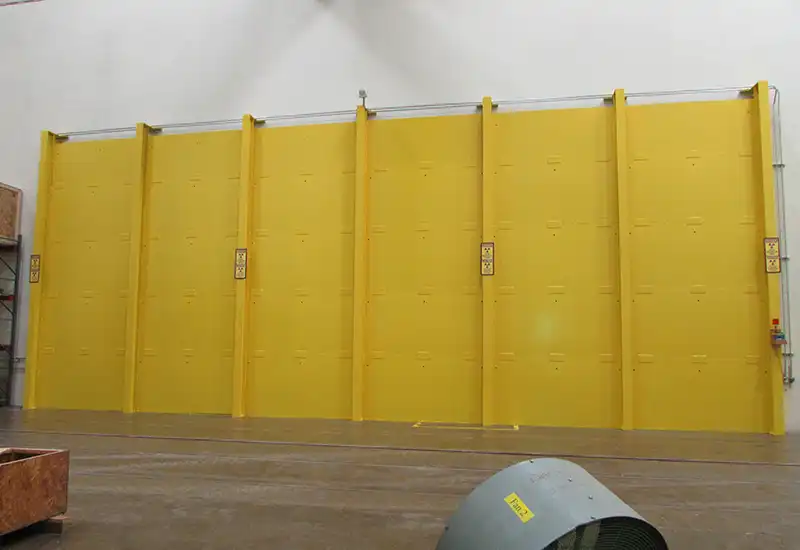
Nucora deployed a team that included a radiological physicist and a materials scientist to BWXT’s facility, providing hands-on expertise and multiple shielding options to test. BWXT ultimately selected our proprietary system, citing both cost savings and performance.
“After looking through all the data and cost, BWXT ultimately decided to go with your product. The Nucora product saved us hundreds of thousands of dollars over the competing products and the results showed minimal differences.”
The results exceeded expectations:
“Today, due to the shielding wall Nucora designed and installed, our dose rate is < 2 mR/hr at the exterior surface of our Target Wall. BWXT was hoping to just get to < 2 mR/hr at 10 feet. We did not think there was any way possible that Nucora could pull off less than 2 mR/hr with no restrictions on our operating capabilities. I am here to guarantee you, they did, and they saved us an astonishing amount of money!”
Engineering Tomorrow’s Nuclear Safety Today
The nuclear industry’s operational environment will only become more demanding. Regulatory requirements will continue to tighten, public scrutiny will intensify, and the financial and environmental costs of traditional approaches will become increasingly difficult to justify.
Concrete will likely remain the primary structural and shielding material for nuclear applications. But when concrete reaches its limits, the choice of alternative shielding materials becomes a strategic decision about operational risk, environmental responsibility, and long-term financial liability.
Nucora Technologies offers a proven alternative. Our proprietary materials provide superior operational flexibility, eliminate long-term environmental liabilities, and consistently deliver better performance at lower total cost. Most importantly, our solutions align with the industry’s broader movement toward sustainable, responsible nuclear operations.
Ready to see what Nucora Technologies can do for your nuclear project? Let’s start the conversation.